Comparison
Rail Island vs Mashinky
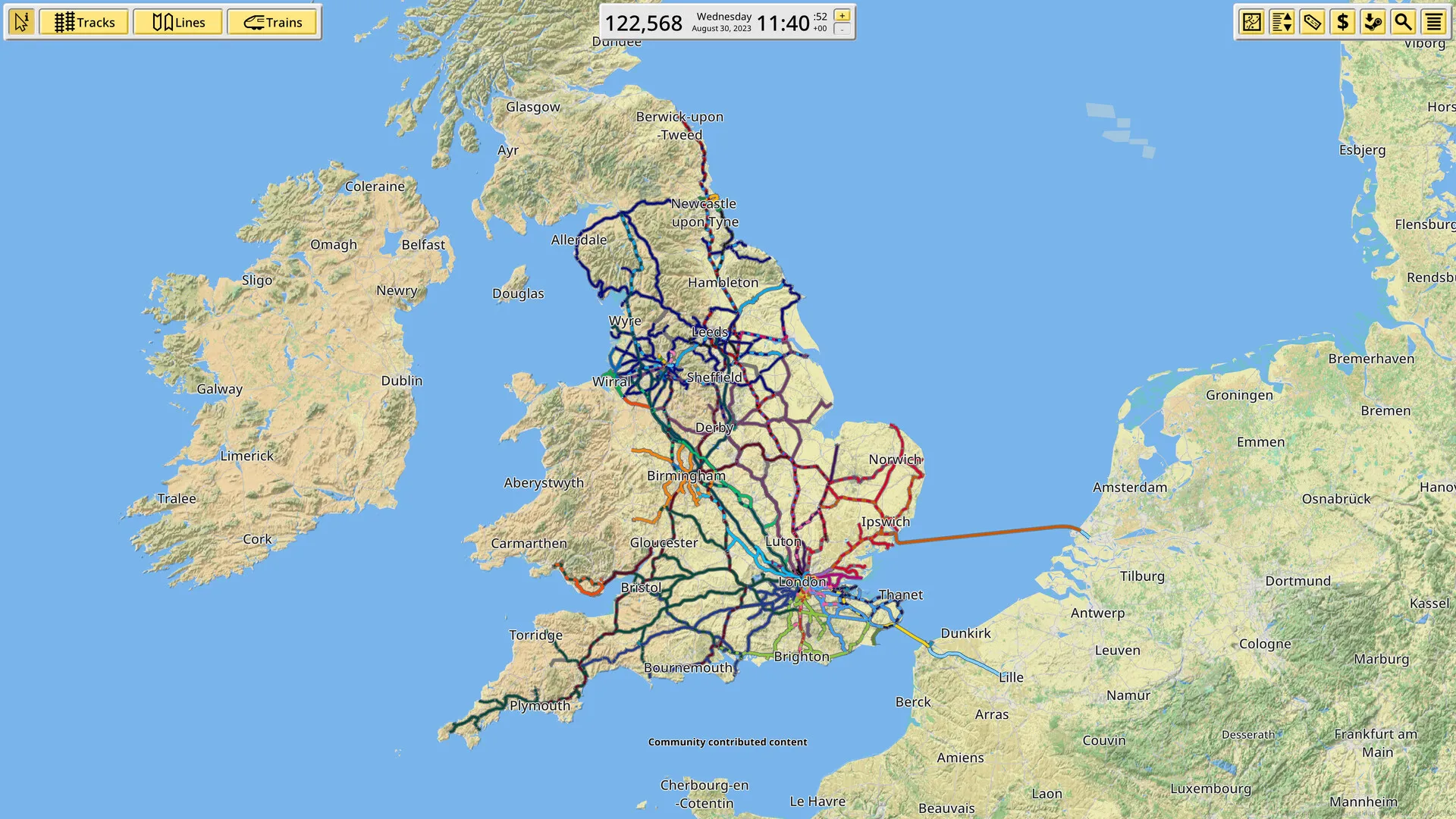
Two train games made in Czechia, pulling in opposite directions. Mashinky is a tight, grid-based puzzle with a token economy and seven historical eras. Rail Island throws out both the grid and the money, and hands you a browser tab and an island.
Side by side
| Side by side | Rail Island | Mashinky ↗ |
|---|---|---|
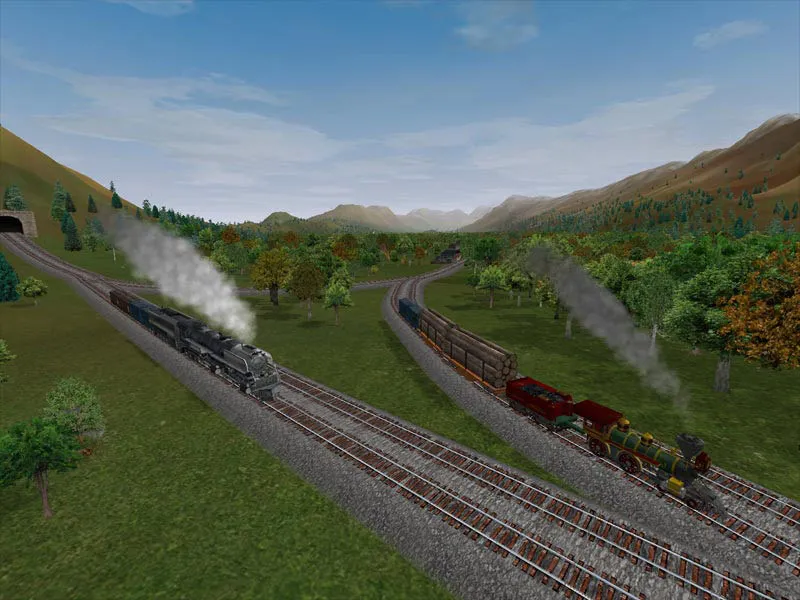
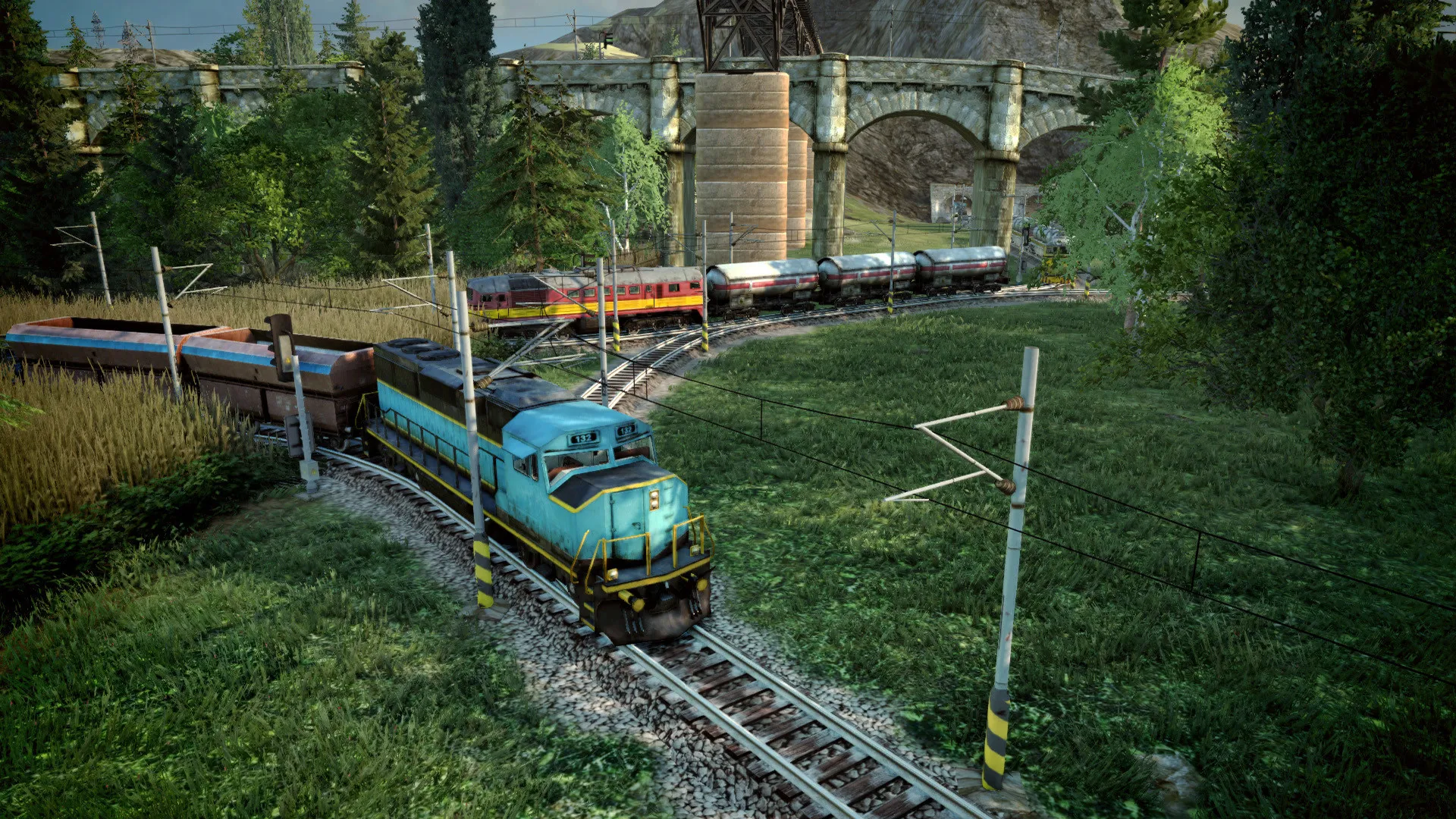
| What you can run | Trains, buses, trams, ships, aircraft and cable cars — nearly 350 vehicles, most of them railway and mostly Czech and European, each previewable in 3D before you buy into it. | Trains above all, with buses and trucks on the roads since the 2019 road-vehicle update. No ships and no aircraft. |
| How you build | Free-angle. You click where the line should go, the game fits a real curve into the bend and shows you its radius, then grades the ground under it into cuttings and embankments. There is no square grid to fight. | A square grid, on purpose — an isometric build mode with board-game rules, where track pieces snap into the lattice. |
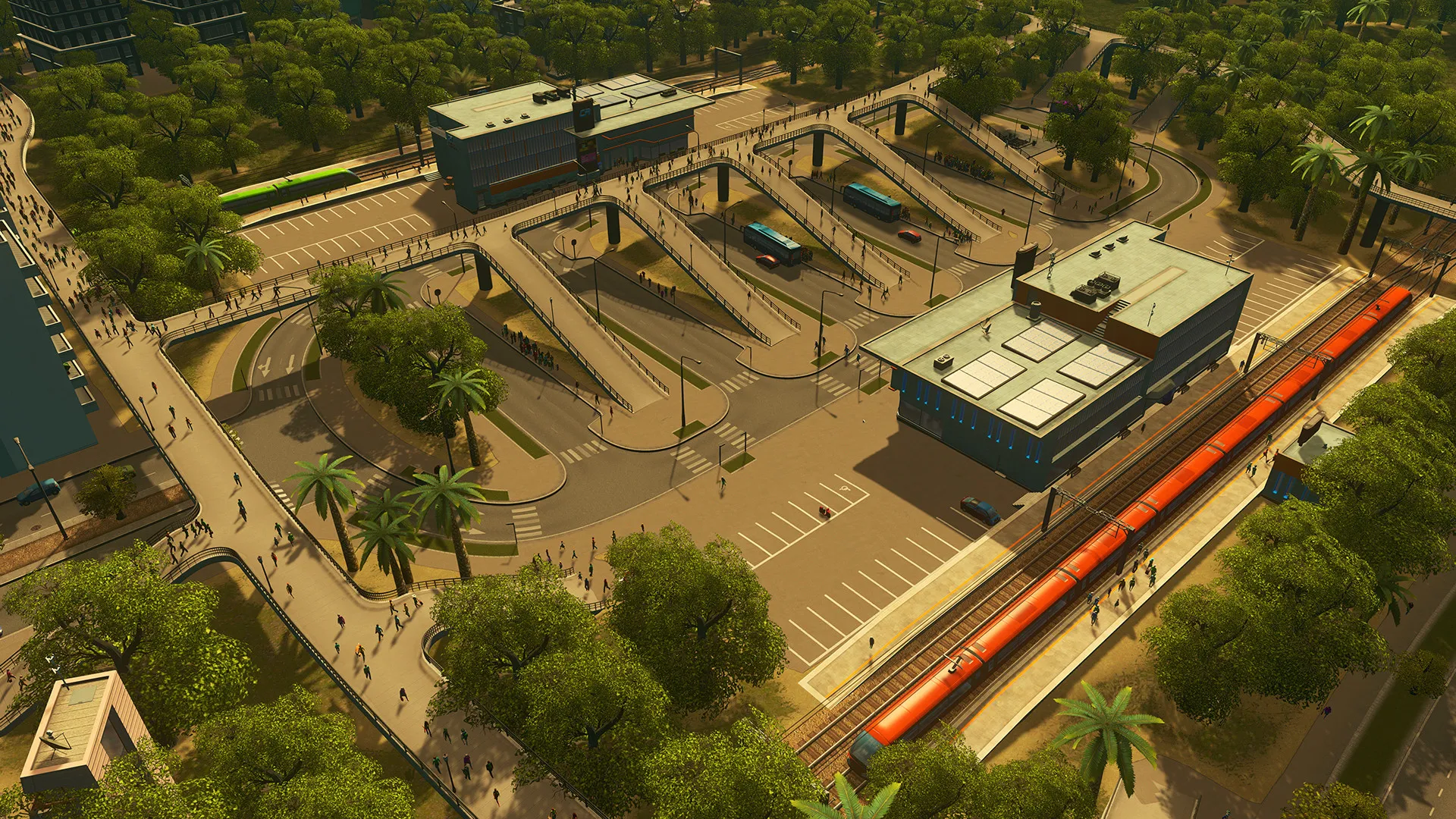
| Towns and cities | Built, not simulated. Seed them with the island or drop a village, town or city with one click — street plan, plazas and all — then place the 137 buildings yourself where you want them. | Simulated. Villages grow into cities as you serve them, and demand for cargo and passengers follows. |
| Money and economy | None at all. No balance, no cargo payments, no loans, no bankruptcy. Nothing limits the railway you build except the island and your patience. | Yes, and unlike anyone else: a token economy where each kind of cargo pays in its own currency, spent on vehicles and buildings across seven historical eras. |
| Where it runs | In a browser, on desktop and on phones, with nothing to install and no console or store involved. Free, with an optional PLUS subscription at $3 a month. There is a Roblox edition too. | A paid download ($24.99) on Steam, Windows only, and still in Early Access after launching there in October 2017. |
Rail Island is not affiliated with any of the games on this page, and nothing here is written on their behalf. Everything said about them was checked against their own sites and store pages in September 2026; games change, so if something here has gone out of date, write to info@railisland.com and it will be corrected.
Two Czech train games, two opposite bets
Mashinky is the work of one developer, Jan Zelený, and it shows in the best way: a single coherent idea, executed precisely. The board-game framing is not decoration — the square grid, the snapping track pieces and the token economy are all the same design decision, which is that a railway should be a puzzle with clean rules. Rail Island is made in Czechia too, and bets the other way: no grid, no rules to satisfy, and a vehicle catalogue that leans on the same Czech and European railways Mashinky draws from.
The grid is the whole argument
Mashinky builds in an isometric mode on a clear square grid. Track snaps to the lattice, junctions are assembled from known pieces, and the result is legible at a glance — you can read a Mashinky junction the way you read a circuit diagram. It is also, deliberately, a constraint you play against.
Rail Island has no lattice. Click a start point, click the next, click a third and the game fits an arc into the bend with its radius shown on the track, then grades a corridor under the whole chain so the line sits in a cutting or on an embankment where it needs to. Doubling a line is a three-click wizard that offsets the whole run perpendicular to it and snaps onto parallel track you already have. What you lose is the puzzle; what you gain is that the railway can follow the land.
Running the network
Both games care about signalling. Mashinky builds complex signal-controlled networks out of its grid pieces; Rail Island gives you semaphores that cut a line into sectors, so several trains can work the same route without meeting. A train in Rail Island is a consist and a list of stops — press Start and the game assembles it on a free platform at its home station and sends it out. Buses, trams, ships and aircraft use the same board and the same stop lists.
Tokens, eras, and none of the above
Mashinky's token economy is its signature: each type of cargo you haul pays in its own currency, and those currencies buy the vehicles and buildings that unlock the next of seven historical eras — five of which are in the Early Access build. It gives the game a spine, a direction and a reason to keep playing tonight.
Rail Island has no tokens, no currency, no eras and no progression. Every build tool is available on the free plan from the first minute, including the Creator, where your own .glb models become buildings, trains, buses, ships, aircraft or cable-car cabins. That is either liberating or aimless depending on what you came for, and it is worth being honest about which of those you are.
Getting hold of them
Mashinky is $24.99 on Steam, Windows only, and has been in Early Access since October 2017 — a long time, and worth knowing before you buy, though it is updated by a developer who has never pretended otherwise. Rail Island costs nothing to open, runs in a browser on desktop and phone, needs no store account, and saves your islands to the cloud once you sign in. Publish one and anybody can open it from a link.
What Mashinky does better
- Progression. Tokens and eras give you a reason to play one more hour; Rail Island gives you none.
- The economy. Hauling cargo means something, and the token idea is genuinely unlike anything else in the genre.
- Coherence. One designer, one idea, carried all the way through the presentation.
- Simulated towns that answer back when you serve them well.
- It is a real desktop game you own, running at desktop performance on a desktop graphics card.
So which one?
If you want a railway that has to add up — tokens earned, eras reached, a grid to solve — Mashinky is a better game than anything a browser can offer today. If the grid is the part you have always quietly resented, and you want to draw a line along a coast and see what it looks like before dinner, that is what Rail Island is for, and it costs nothing to find out.
Questions people ask
- Is Mashinky finished?
- Mashinky has been in Steam Early Access since October 2017 and is still there, with five of seven planned historical eras in the build. It is developed by a single developer and continues to be updated.
- Is Rail Island grid-based like Mashinky?
- No. Mashinky builds on a square grid with snapping track pieces; Rail Island is free-angle. You click points, the game fits a curve with a radius you can set, and the terrain grades itself under the finished chain.
- Does Mashinky run on Mac, Linux or mobile?
- Mashinky is sold for Windows only on Steam. Rail Island runs in any modern browser, which covers macOS, Linux, Windows, phones and tablets without an install.
- Does Rail Island have an economy like Mashinky tokens?
- No. Rail Island has no currency of any kind — no tokens, no balance, no unlocks and no eras. Every build tool is available from the start on the free plan.