Comparison
Rail Island vs Transport Fever
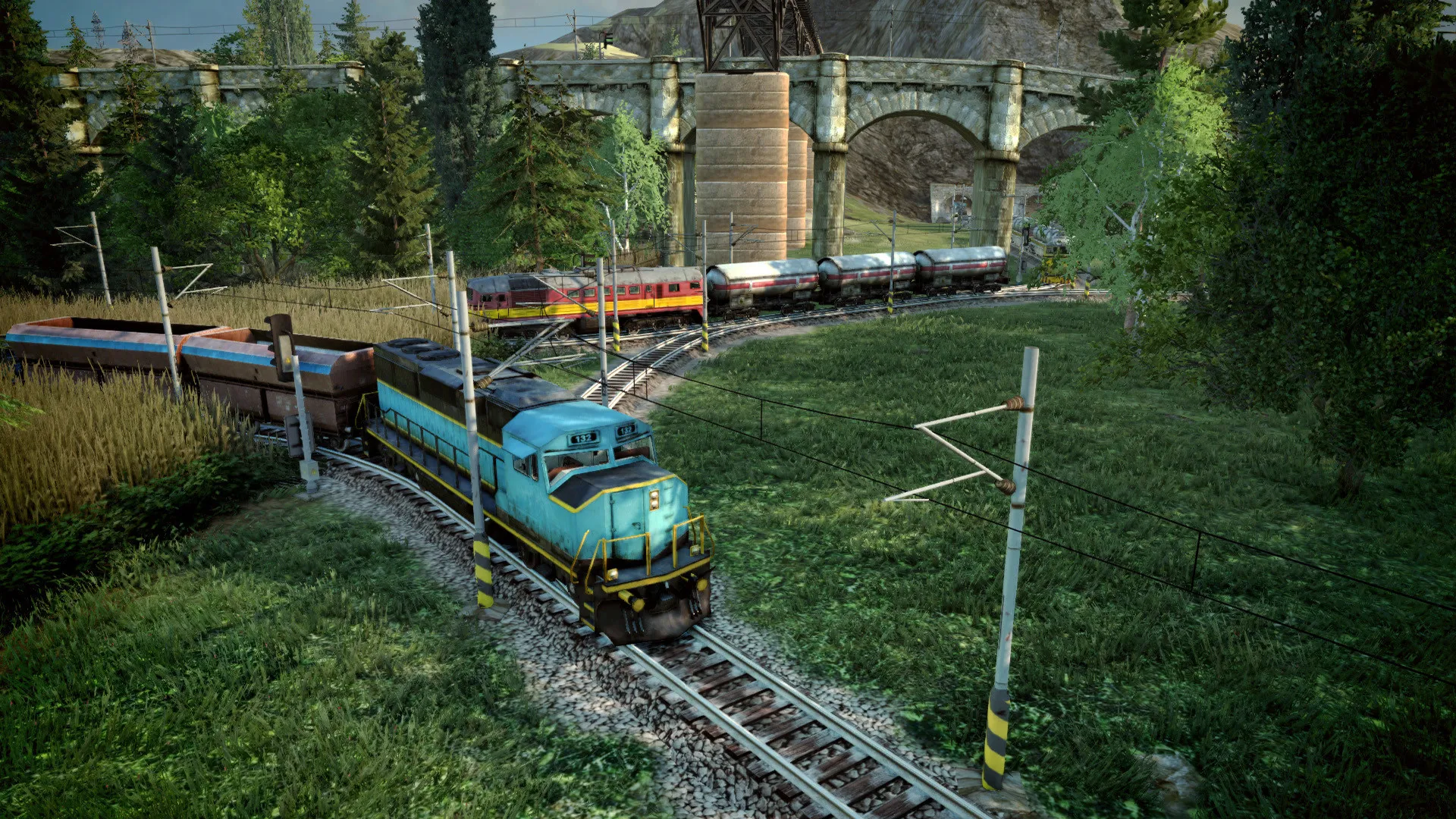
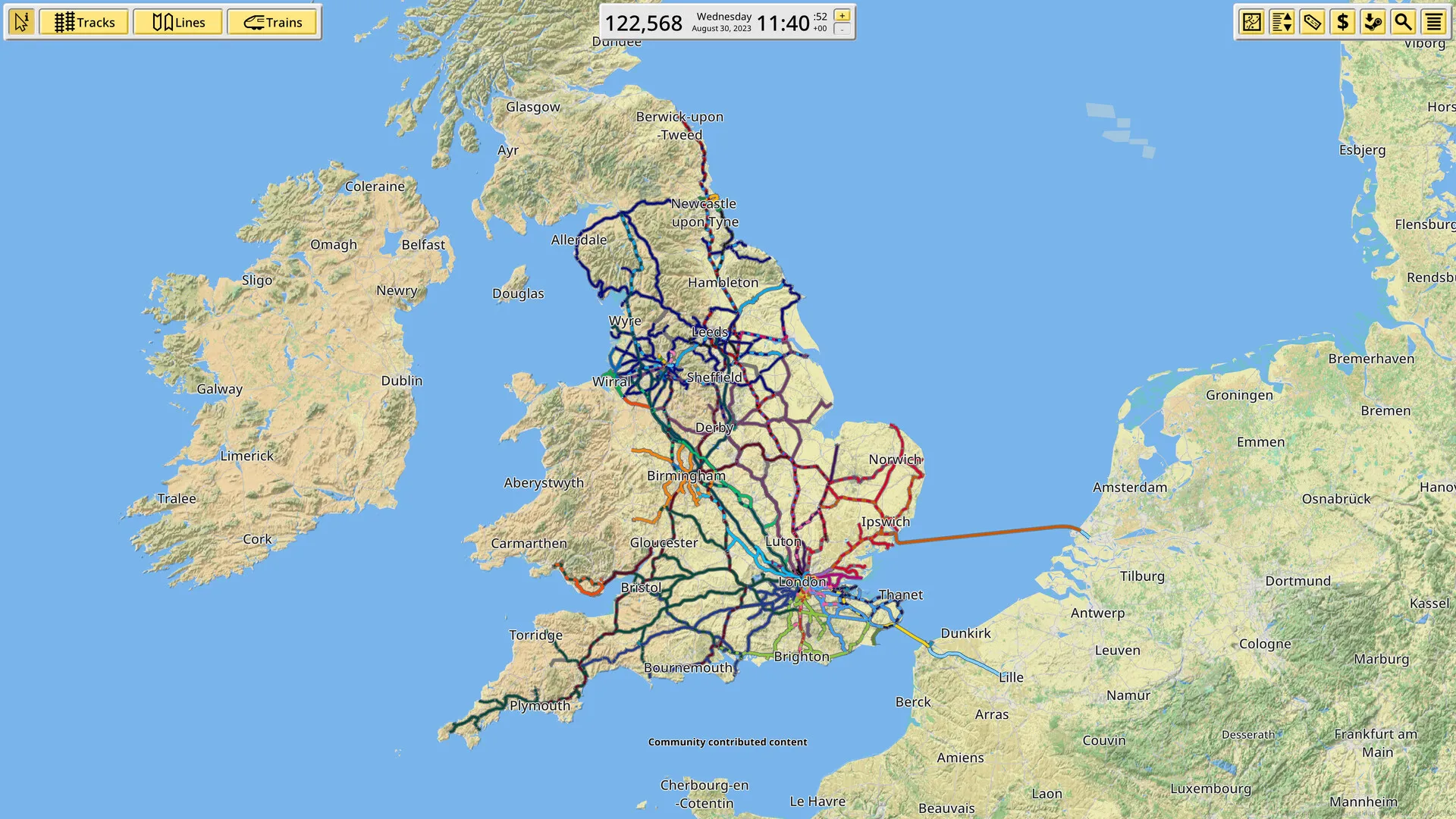
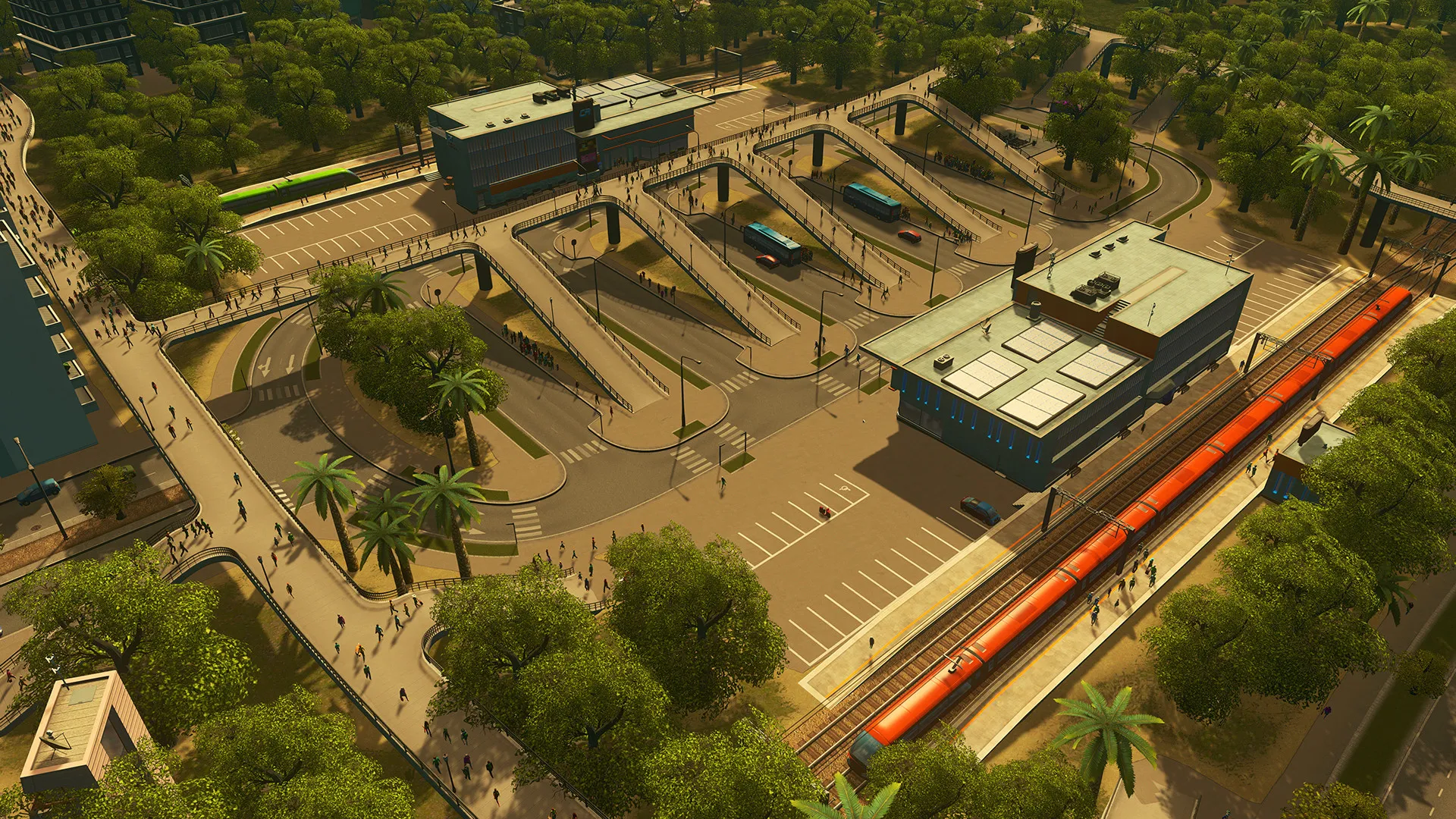
Transport Fever is the closest thing to Rail Island on this list — both let you draw a railway rather than stamp it onto a grid. What separates them is everything around that: a production economy and a campaign on one side, a free browser sandbox on the other.
Side by side
| Side by side | Rail Island | Transport Fever 2 ↗ |
|---|---|---|
| What you can run | Trains, buses, trams, ships, aircraft and cable cars — nearly 350 vehicles, most of them railway and mostly Czech and European, each previewable in 3D before you buy into it. | Trains, trams, buses, trucks, ships and aircraft — over 200 vehicles in Transport Fever 2, plus a large Steam Workshop of mods. |
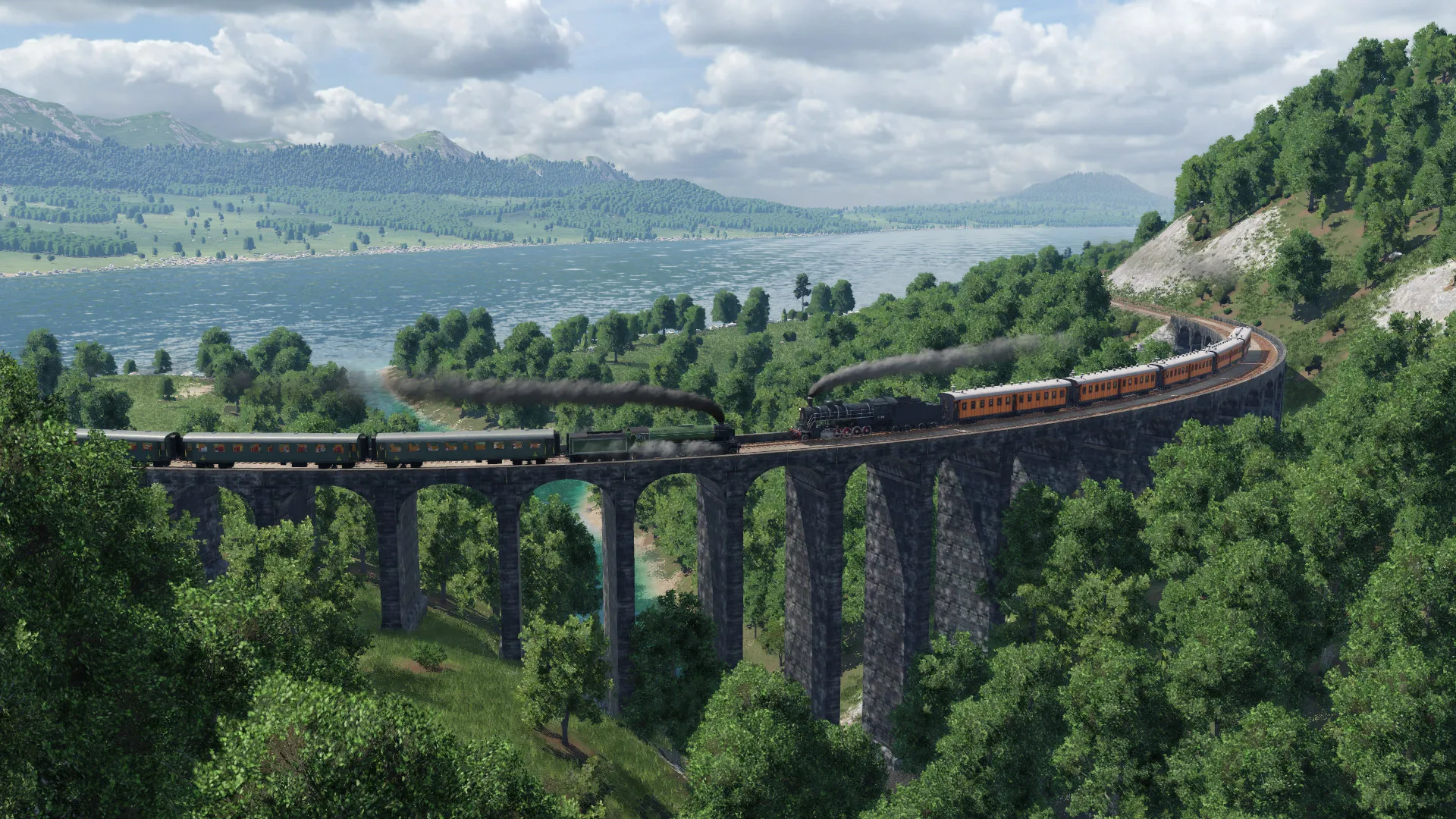
| How you build | Free-angle. You click where the line should go, the game fits a real curve into the bend and shows you its radius, then grades the ground under it into cuttings and embankments. There is no square grid to fight. | Free-form, like Rail Island: curves you place yourself, full terrain modification, and modular stations, harbours and airports. |
| Towns and cities | Built, not simulated. Seed them with the island or drop a village, town or city with one click — street plan, plazas and all — then place the 137 buildings yourself where you want them. | Simulated. Towns grow and re-zone into residential, commercial and industrial districts as your network makes them reachable. |
| Money and economy | None at all. No balance, no cargo payments, no loans, no bankruptcy. Nothing limits the railway you build except the island and your patience. | Yes — more than ten production chains with factories and goods, running costs per vehicle and line, a campaign across three continents and a free-play mode. |
| Where it runs | In a browser, on desktop and on phones, with nothing to install and no console or store involved. Free, with an optional PLUS subscription at $3 a month. There is a Roblox edition too. | A paid download on Steam, GOG and Epic for Windows, macOS and Linux, plus a Console Edition for PlayStation and Xbox released in March 2023. Transport Fever 3 follows on 29 September 2026 on PC, Mac, Linux, PS5 and Xbox Series X|S. No mobile or browser version. |
Rail Island is not affiliated with any of the games on this page, and nothing here is written on their behalf. Everything said about them was checked against their own sites and store pages in September 2026; games change, so if something here has gone out of date, write to info@railisland.com and it will be corrected.
The closest relative
Of the three games compared on this site, Transport Fever is the one that builds the way Rail Island does. There is no tile grid in either: you decide where the line goes, the curve follows your hand, and the landscape is reshaped to carry it. If you have spent an evening threading a double-track main line along a Transport Fever valley, the Rail Island rail tool will feel familiar within a minute.
The difference is what the building is for. Transport Fever 2 is a full economic simulation — more than ten production chains, factories that want raw material and towns that want the goods, costs that run whether your trains do or not, and a campaign across three continents to teach it to you. Rail Island removes that layer entirely. There is no money, no cargo payment and no upkeep, and the island is whatever you make of it.
The fleet on each side
Transport Fever 2 ships over 200 vehicles and has a deep Steam Workshop behind it, which in practice means any real locomotive you care about has probably been modelled by somebody. Rail Island ships nearly 350 of its own, weighted towards Czech and European railways, with buses and trams for the streets, ferries and liners for the water, aircraft for three sizes of airport, and cable cars — which Transport Fever does not have at all.
What runs on a Rail Island map
- Trains
- Buses
- Trams
- Ships
- Aircraft
- Cable cars
Cities that grow, cities you place
Transport Fever 2 towns are alive: connect them well and they spread, re-zone and demand more, and a good network visibly changes the map. Rail Island towns are yours to place. A dial on the new-island screen decides how built-up the world starts, the City tool plants a complete village, town or city with its street plan wherever you click, and the catalogue of 137 buildings — village houses, shopfronts, industry, castles, the Eiffel Tower — is there to compose whatever the railway deserves.
The economy, and going without one
Transport Fever 2 gives every line a cost and every delivery a value, and the game is largely about the gap between them: which chain to serve, when to replace ageing stock, whether that tunnel pays for itself. Rail Island prices nothing. You never choose between the route that works and the route you can afford, which removes a whole layer of strategy — and removes, with it, the reason most half-built networks get abandoned.
Where each one runs
Transport Fever 2 is bought once and installed: Steam, GOG or Epic on Windows, macOS and Linux, with a Console Edition on PlayStation and Xbox since March 2023. Its sequel, Transport Fever 3, is published by Paradox and releases on 29 September 2026 for PC, Mac and Linux alongside PS5 and Xbox Series X|S — worth knowing before you buy the older one at full price. Neither runs on a phone or in a browser, and both want a real graphics card.
Rail Island asks for a browser tab. It runs on a desktop and on a phone, saves to the cloud when you sign in, and costs nothing to start; the optional PLUS subscription is $3 a month. There is nothing to download, nothing to patch and no hardware requirement beyond a browser that can draw 3D.
What Transport Fever does better
- The simulation. Production chains, town growth and line economics are the point of the game, and Rail Island has none of them.
- Presentation. It is a full desktop title with the budget to look like one, and it still looks superb.
- The campaign. Hours of guided scenarios across three continents, where Rail Island hands you an island and a toolbar.
- Mods. The Steam Workshop has years of vehicles, buildings and total conversions behind it.
- You own it. One purchase, offline, on a console if you prefer the sofa.
So which one?
If you want to be given a problem — supply this factory, connect this city, keep the company solvent — buy Transport Fever. If the problem you want is the one you set yourself, and you would rather spend the evening getting a viaduct right than getting a balance sheet right, Rail Island is free, it is already installed, and it builds with the same freedom.
Questions people ask
- Is Rail Island like Transport Fever?
- In the building, yes: both let you draw track at any angle and reshape the terrain under it, rather than working on a tile grid. In everything else, no — Transport Fever 2 is a paid economic simulation with production chains, growing cities and a campaign, while Rail Island is a free browser sandbox with no money in it at all.
- Is there a free alternative to Transport Fever?
- Rail Island is free to play in a browser, with every build tool included and an optional $3-a-month PLUS subscription that lifts the free edition limits. OpenTTD is free and open-source as well, though it builds on a tile grid rather than freehand.
- Can I play Transport Fever on a phone or in a browser?
- No. Transport Fever 2 is a desktop game on Windows, macOS and Linux with a PlayStation and Xbox Console Edition; there is no mobile or browser version, and the same is true of Transport Fever 3. Rail Island runs in a mobile browser and can be added to a phone home screen.
- When does Transport Fever 3 come out?
- Transport Fever 3, developed by Urban Games and published by Paradox Interactive, releases on 29 September 2026 for PC, Mac and Linux as well as PlayStation 5 and Xbox Series X|S.